MEL Science Makes Learning Feel Like an Adventure

MEL Science makes the average afternoons a discovery time at any school of interest to the curious children eager to pose questions about the way the world works.
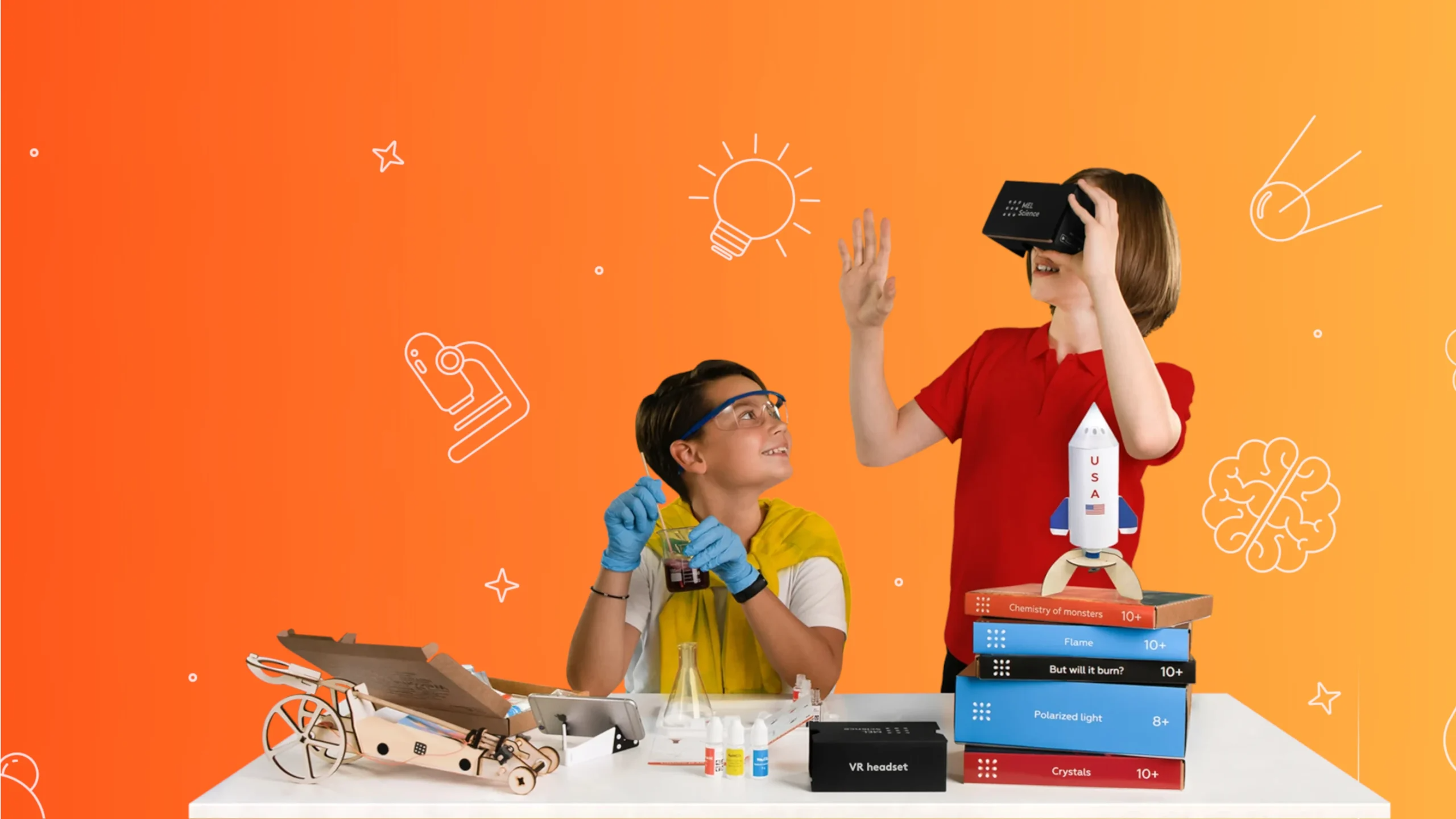
MEL Science makes the average afternoons a discovery time at any school of interest to the curious children eager to pose questions about the way the world works. The problem associated with searching for meaningful things among parents who want to find a good balance between fun and learning is that it is possible but it becomes natural and exciting to do. The children are encouraged to develop ideas based on hands-on experiments and interactive computer tools that cause science to be made real and easy to deal with, instead of memorising facts.
Science ceases to be challenging as soon as children are able to observe the actions themselves. The best way to learn something is to develop curiosity by making learning more of play rather than a form of pressure.
Why Kids Learn Better With Hands-On Science
The learning process allows children to build, touch, and test things on their own and it makes things more understandable. Passive reading is quickly forgotten, but active discovery produces better memory and greater knowledge as it progresses.
Experimental learning helps children to ask more questions without ithe ntimidation of receiving the wrong answers. The confidence is gained automatically as they will experiment, see the results, and relate actions to results in a secure environment.
This approach also encourages various learning styles and in particular, visual and kinesthetic learners. Children with textbook problems tend to do well when science is physically experimented with.
Making Screen Time into Smart Time.
Most parents are frightened about the screen time, yet not all online time is equivalent and unproductive. Interactive science transforms devices into tools providing guidance to the learning rather than attention distractions.
Digital guides are informative in a pictorial format, which children can easily follow to provide them with step-by-step instructions. Virtual experience makes children experience with scientific concepts that would otherwise not be experienced in a natural home environment.
Another technology that adds an additional layer is augmented reality, which inserts the scientific models in the real world in which they are situated. Complex issues just become easy, interesting and even exciting.
Learning That Matches Your Child’s Age
The strategies should be applied differently to various ages, and organized programs are useful to adjust to various stages of development. Little children get to learn best in playful discoveries, colourful images and easy experiments that produce large visual outcomes.
Children at the higher levels like older children, take more serious challenges like creating models on how real devices come to pass. Layered learning also makes science exciting rather than dreadful and mind-boggling.
This development will facilitate the development of the children beyond mere curiosity into actual skills of scientific thought. They acquire logic, patience and problem-solving skills step by step.
Connecting with Family and Strengthening Fellowship.
Parents generally do not spend much time with their children as moments of sharing through science activities and this creates a good bonding experience. Collaboration during work on experiments is the space that allows conversation and laughter as well as cooperation.
Such similar experiences assist kids to feel supported as well as stimulate them to think and be creative independently. Learning is not the preserve of academics only; it is something people do as a family.
Parents can also understand the way their children think, solve issues and how they tackle the problems. That knowledge enhances post-learning time communication.
Secured, Epatronized and Domestic.
When an experiment occurs in other rooms, then there is safety when one is working with younger people at home. Harmless and transparent instructions and kits are well designed and make the activities controlled and safe.
Formal instructions help make the experiments educational but exciting and new at the same time. Children are able to concentrate on exploration without getting lost or having to take unnecessary risks.
When systematic, parents would be at ease with exploration. This faith allows one to stimulate the curiosity without worrying every moment.
Promotions of Long-term Curiosity.
Great science education is not just about one experiment / short term thrill. Actual success occurs when children begin to perceive science in the daily things surrounding them.
The questions they ask are where the sky gets its color, what happens to electronic things, or what makes things react in nature. The curiosity, readiness to be sometimes interesting, turns into the normalcy of thinking.
Such an attitude helps to be successful in school, not only in subjects but also in creative problem-solving in later life. Kids are taught to seek out and not avoid challenges.
Encouraging Long-Term Curiosity
This would allow the families to see firsthand the experiments and the interactive learning experience and how enjoyable it can really be. The fastest way to generate enthusiasm is to use visual representations in addition toa written explanation.
Children get motivated as they are exposed to real-life scenes of discovery, building and experimentation. It is that excitement that frequently results in the on-the-spot desire to try activities themselves.
See the Experience in Action
See how educational boxes and online technologies can become one and make science fun, easy, and adjustable to children at home.
A Better Way of Helping Young Minds.
Education is most effective when it becomes part of the natural, thrilling and when it is tied to real-life situations that children can relate to. MEL Science assists in converting learning into exploring, connecting and feeling safe exploration that children find to be enjoyable as well.
When science is more an adventure rather than a necessity, the motivation has increased without any pressure or frequent reminders. Even after childhood years, such a positive relationship with learning can take so long. Teaching kids to love learning today would develop abilities, inquisitiveness, and confidence that they take with them to whatever is in store.